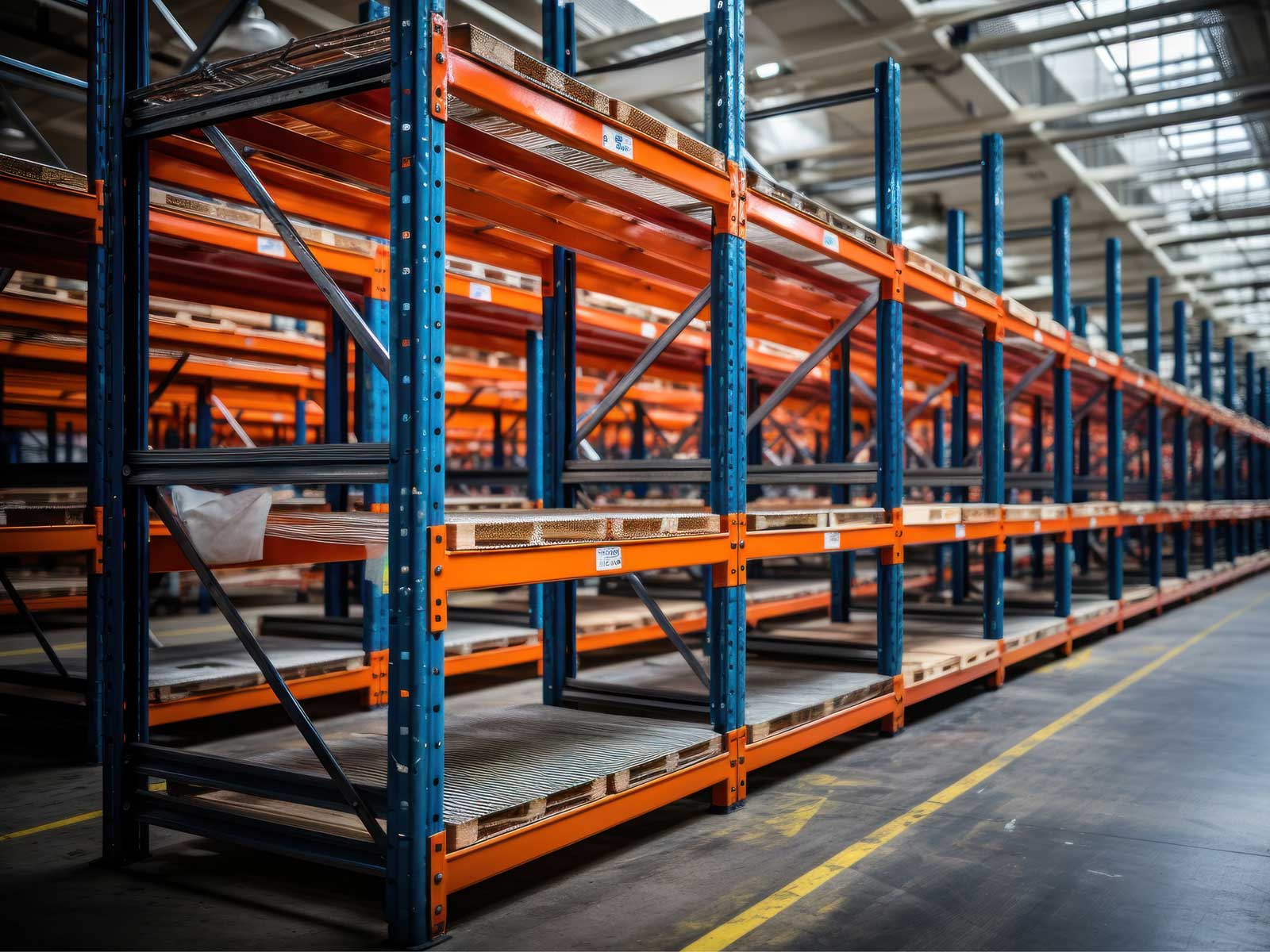
Warehouses today are no longer just storage spaces. They are operational hubs where efficiency, safety, speed, and space utilization directly affect business profitability. Whether you operate a manufacturing facility, logistics warehouse, retail distribution center, pharmaceutical storage unit, or industrial stockyard, your warehouse racking system plays a major role in your daily operations.
Unfortunately, many businesses in Pakistan invest in racking systems without proper planning. They choose based on price alone, overlook load requirements, or install systems that fail to support long-term operational growth. The result is wasted space, damaged inventory, workflow inefficiencies, and safety risks.
This buyer guide will help you understand how to choose the right warehouse racking system for your business and avoid costly mistakes.
Why Warehouse Racking Systems Matter
A professionally planned warehouse racking system helps businesses:
- Maximize vertical storage space
- Improve inventory organization
- Increase operational efficiency
- Reduce product damage
- Improve warehouse safety
- Enhance forklift accessibility
- Support future warehouse expansion
In growing industrial markets like Pakistan, where warehouse costs and operational pressure continue to rise, efficient storage planning is becoming essential rather than optional.
Types of Warehouse Racking Systems
Choosing the correct racking system depends on your product type, warehouse layout, inventory movement, and load requirements.
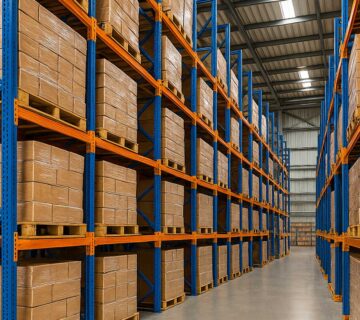
1. Selective Pallet Racking
Selective pallet racking is the most common warehouse storage solution used across Pakistan.
It provides direct access to every pallet and is ideal for warehouses handling multiple SKUs with regular inventory movement.
Best For:
- FMCG warehouses
- Retail distribution
- Logistics companies
- Manufacturing facilities
Advantages:
- Easy accessibility
- Cost-effective
- Flexible configuration
- Compatible with forklifts
2. Drive-In Racking Systems
Drive-in racking systems are designed for high-density storage where forklift trucks enter the racking lanes.
These systems maximize storage capacity while reducing aisle requirements.
Best For:
- Cold storage facilities
- Bulk inventory storage
- Warehouses with limited SKU variety
Advantages:
- High storage density
- Better space utilization
- Reduced aisle space
3. Double Deep Racking
Double deep racking increases storage capacity by storing pallets two rows deep.
It balances storage density with accessibility.
Best For:
- Medium to large warehouses
- Distribution centers
- Industrial storage operations
4. Cantilever Racking
Cantilever racking is designed for long, bulky, or irregular materials.
Best For:
- Steel pipes
- Timber storage
- Construction materials
- Industrial fabrication units
Advantages:
- Easy loading/unloading
- Supports oversized materials
- Flexible storage lengths
5. Heavy-Duty Shelving Systems
Heavy-duty shelving is commonly used for hand-loaded inventory, spare parts, tools, and boxed products.
Best For:
- Back-store storage
- Workshops
- Spare parts inventory
- Industrial supply stores
Key Factors to Consider Before Buying Warehouse Racking
1. Load Capacity Requirements
One of the biggest mistakes businesses make is ignoring actual load calculations.
Every warehouse rack must be designed according to:
- Pallet weight
- Beam load capacity
- Upright strength
- Floor condition
- Seismic and safety factors
Overloading racks can lead to structural failure and major safety risks.
Always request proper engineering specifications before purchasing.
2. Warehouse Layout Planning
Good racking is not just about installing shelves.
A proper warehouse layout considers:
- Forklift movement
- Aisle width
- Picking flow
- Receiving and dispatch areas
- Emergency access
- Future expansion possibilities
An optimized layout improves operational speed and reduces congestion.
3. Ceiling Height Utilization
Many warehouses in Pakistan underutilize vertical space.
A professionally designed industrial racking system can significantly increase storage capacity by maximizing warehouse height safely and efficiently.
This reduces the need for additional rented space.
4. Inventory Movement Speed
Different industries require different inventory access methods.
For example:
- FMCG businesses require fast picking access
- Bulk storage facilities prioritize storage density
- Manufacturing warehouses may need mixed storage configurations
The right racking system depends heavily on how fast inventory moves.
5. Material Quality
Not all warehouse racks are manufactured equally.
Low-quality steel, poor welding, and weak powder coating can reduce rack lifespan and increase maintenance costs.
Always evaluate:
- Steel thickness
- Load certification
- Surface treatment
- Corrosion resistance
- Structural stability
Industrial environments in Pakistan often involve dust, humidity, and heavy operational usage, making quality even more important.
6. Safety Standards
Warehouse safety should never be compromised.
Your racking system should include:
- Rack protectors
- Safety locking pins
- Proper anchoring
- Load signage
- Impact protection barriers
Safe warehouse design reduces accidents and improves compliance.
Common Mistakes Buyers Make
Choosing Only on Price
Low-cost systems often result in higher maintenance and replacement costs later.
Ignoring Future Expansion
Warehouses grow over time. Your racking system should allow scalability.
Poor Space Planning
Improper aisle spacing and layout design reduce efficiency.
No Engineering Assessment
Unplanned installations increase structural and operational risks.
Buying Generic Systems
Every warehouse has different operational needs. Customized planning is essential.
Industries That Benefit From Warehouse Racking Systems
Warehouse racking systems are widely used across Pakistan in:
- Logistics & Distribution
- Textile Industry
- Pharmaceutical Storage
- FMCG Warehousing
- Manufacturing Plants
- Construction Material Storage
- Retail Distribution Centers
- Automotive Parts Warehouses
- Cold Storage Facilities
How Professional Racking Planning Improves ROI
A professionally planned storage system helps businesses:
- Store more inventory in less space
- Improve dispatch speed
- Reduce product handling damage
- Increase operational productivity
- Lower warehouse operating costs
- Improve inventory management
In many cases, optimized racking systems eliminate the need for warehouse expansion.
Why Businesses in Pakistan Are Upgrading Their Storage Systems
As industrial operations grow, businesses are shifting from traditional floor stacking to engineered warehouse racking systems.
The reasons include:
- Rising warehouse rental costs
- Higher inventory volumes
- Better inventory tracking requirements
- Improved operational efficiency
- Safer warehouse environments
Modern industrial storage systems are becoming a necessity for competitive operations.
How Khambatis Can Help
Khambatis provides complete warehouse racking and industrial storage solutions across Pakistan.
Our services include:
- Site surveys
- Warehouse layout planning
- Load analysis
- Customized racking design
- Heavy-duty pallet racking
- Industrial shelving systems
- Installation and execution
- Expansion and optimization support
We design practical, durable, and scalable storage systems built for real industrial operations.
Conclusion
Choosing the right warehouse racking system is a long-term operational decision — not just a product purchase.
The correct industrial racking solution improves safety, efficiency, inventory management, and warehouse scalability while reducing operational costs.
Before investing, businesses should evaluate their warehouse layout, load requirements, inventory movement, and future growth plans carefully.
A professionally designed warehouse storage system delivers better performance, stronger durability, and higher long-term value.