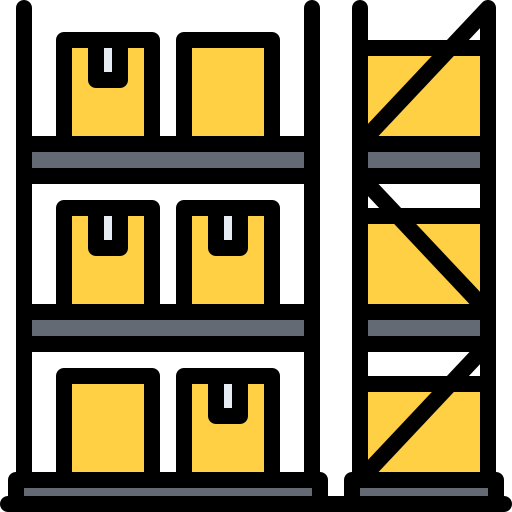
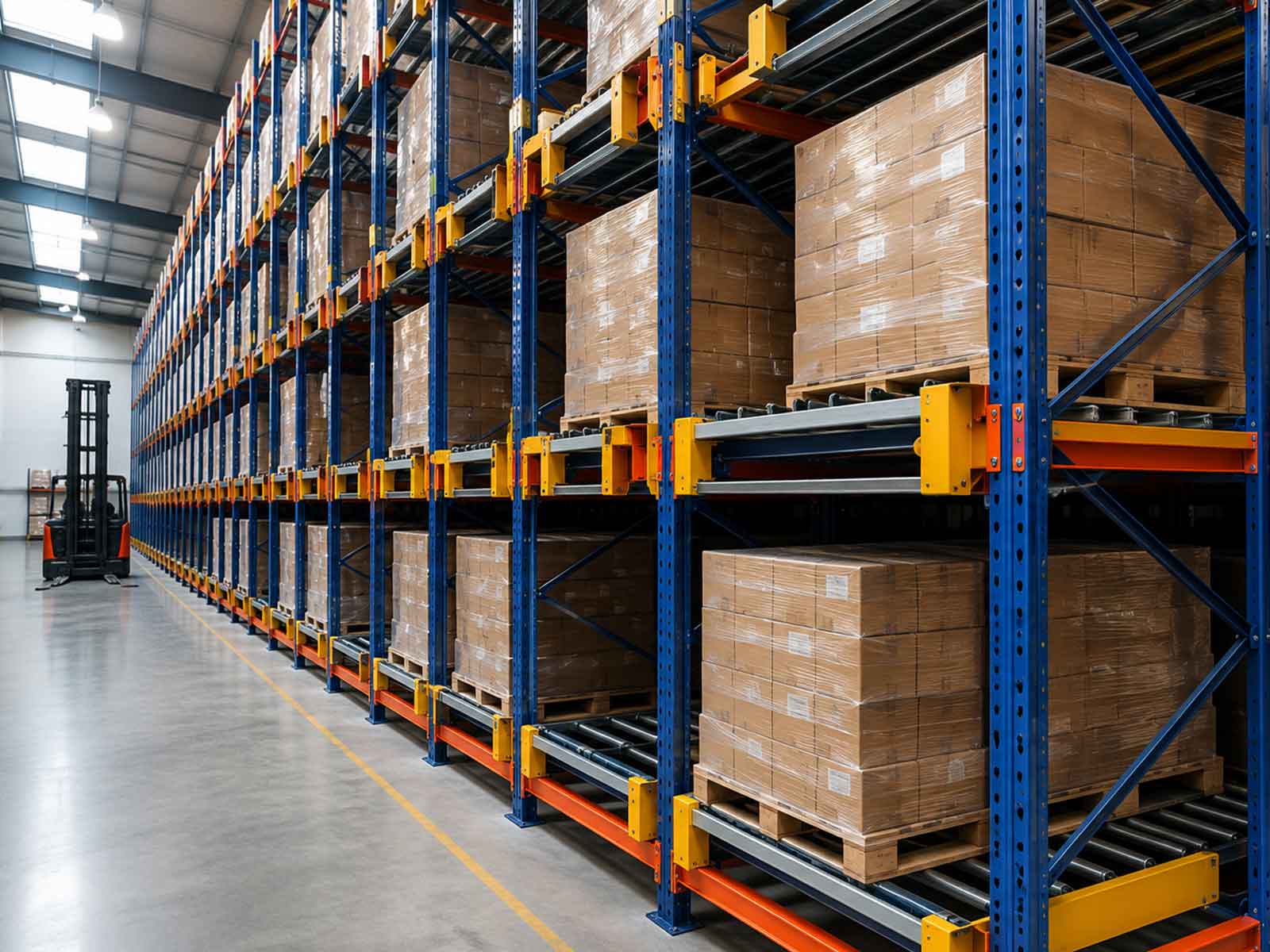
Push-back racking is a high-density, forklift-loaded storage system where pallets sit on nested carts that ride inclined rails. Loading a new pallet pushes the row back; unloading lets gravity roll the next pallet forward — LIFO (last-in, first-out). It stores 2 to 6 pallets deep per lane, cutting aisle space by up to 75% compared to selective racking, making it ideal for Pakistani manufacturers and distributors with limited SKUs and constrained floor space.
What Is Push-Back Racking and Why Pakistani Warehouses Are Adopting It
Land and covered warehouse space in Karachi, Lahore, and Faisalabad has become one of the highest fixed costs a manufacturer or distributor carries. Every additional square foot of aisle that isn’t storing product is a square foot working against the business. Push-back racking answers that problem directly: it is a forklift-loaded, high-density storage system that lets you store two to six pallets deep in a single lane, served from one aisle.
Each lane uses a set of nested pallet carts riding on inclined steel rails. The forklift operator pushes a loaded pallet onto the front cart, which in turn pushes the row back on a slight decline. When the front pallet is picked, gravity rolls the next pallet forward automatically. This is a LIFO (last-in, first-out) system — the last pallet loaded is the first one retrieved.
How Push-Back Racking Compares to Selective and Drive-In Racking
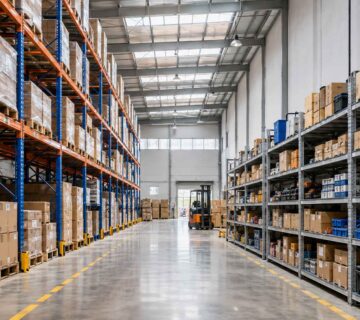
Selective pallet racking gives 100% SKU accessibility but wastes significant floor space on aisles — often the biggest cost driver in a standard warehouse layout. Drive-in racking increases density but forces the forklift to enter the rack structure itself, slowing cycle times and increasing the risk of rack damage.
- Selective racking: every pallet accessible, lowest density, highest aisle cost
- Drive-in racking: highest density, forklift enters the structure, slower cycle time, higher damage risk
- Push-back racking: forklift stays in the aisle, 2-6 pallet depth, faster cycle time than drive-in, moderate-to-high density
For Pakistani businesses running a limited number of SKUs with multiple pallets per SKU — common in FMCG distribution, pharmaceuticals, and textile finished-goods storage — push-back racking usually delivers the best balance of density and speed.
Where Push-Back Racking Makes the Most Sense in Pakistan
- FMCG distributors storing high-volume, low-SKU-count inventory in Karachi and Lahore distribution hubs
- Pharmaceutical warehouses needing dense, organized batch storage close to expiry-tracking zones
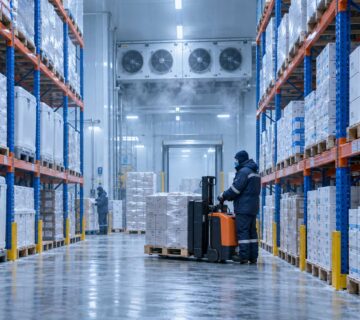
- Cold storage and food warehousing where every cubic foot of refrigerated space carries a premium cost
- Manufacturers with seasonal finished-goods buildup — textile, garments, and consumer durables
- 3PL operators serving Pakistan’s growing e-commerce sector who need to densify existing floor space rather than lease more of it
Structural and Safety Considerations for Push-Back Racks in Pakistan
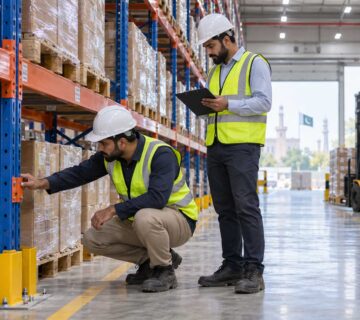
Push-back systems carry heavier point loads on fewer upright frames than selective racking, which makes correct structural engineering non-negotiable. In Pakistan’s seismic zones — particularly Karachi (Zone 2B) and parts of northern Punjab and KP — rack anchoring, base plate design, and load beam certification should follow recognised structural load standards rather than generic steel gauges.
- Frame and beam load ratings engineered for actual pallet weight, not estimated averages
- Anchor bolts and base plates rated for local floor slab conditions
- Cart and rail maintenance schedule to prevent pallet jamming or cart derailment
- Clear lane depth signage so forklift operators load only rated capacity
Cost Factors for Push-Back Racking in Pakistan
Push-back racking costs more per storage position than selective racking because of the cart-and-rail mechanism, but it typically costs less than fully automated pallet shuttle systems while still delivering strong density gains. Pricing in the Pakistani market depends on steel gauge, cart quality, lane depth (3-deep vs 4-deep vs 6-deep), and site-specific installation requirements. Businesses evaluating the investment should weigh it against the value of the warehouse space it frees up — in high-rent industrial zones, the payback period is often faster than expected.
Getting Push-Back Racking Right the First Time
Push-back racking is not a catalogue purchase — lane depth, cart capacity, and beam elevations need to be engineered around your actual pallet dimensions, weights, and forklift reach specifications. Khambatis designs and fabricates push-back racking systems locally in Pakistan, engineered to each facility’s load and space requirements rather than sold as one-size-fits-all units.
Frequently Asked Questions
What is push-back racking used for?
Push-back racking is used to store multiple pallets of the same SKU deep in a single lane while keeping forklift access from one aisle only, maximizing storage density for low-SKU, high-volume inventory.
How many pallets deep can push-back racking go?
Most push-back systems in Pakistan are configured 2 to 4 pallets deep, though heavy-duty designs can extend to 5 or 6 pallets deep depending on load and space requirements.
Is push-back racking cheaper than drive-in racking?
Push-back racking generally costs more per position upfront than drive-in racking, but it offers faster cycle times and lower rack-damage risk since forklifts never enter the structure.
What is the difference between push-back and pallet flow racking?
Push-back racking is LIFO (last pallet in is first out) and loads from the front; pallet flow racking is FIFO (first pallet in is first out) and loads from the back while picking from the front.
Can push-back racking be used for cold storage?
Yes, push-back racking is well suited to cold storage and food warehousing because its high density reduces the amount of expensive refrigerated floor space required per pallet position.